 how-to
How to Tell If Your Septic System Needs Replacement
Table of Contents
- Signs of Septic System Failure: What to Watch For
- False Alarms: When Symptoms Do Not Mean Replacement
- Septic System Repair or Replacement: How to Decide
- Septic System Lifespan: Age, History, and Expected Service Life
- Immediate Safety and Environmental Steps to Take Now
- The Septic System Replacement Process in British Columbia
- Conclusion: Your Next Step Toward a Working Septic System
- Frequently Asked Questions
Last Updated: October 14, 2026
Signs of Septic System Failure: What to Watch For
If you’re wondering how to tell if your septic system needs replacement, start by looking for changes inside and outside your home. These signs can help you decide when to take a closer look.
Septic system failure happens when wastewater can no longer move through the tank and dispersal area as intended. The BC Ministry of Health guidance on onsite sewage systems explains that owners are responsible for keeping their system working and for arranging maintenance.
Indoor Warning Signs
Watch for changes inside the home, especially when several fixtures are affected at once:
- Sewage backing up into the home. A backup needs prompt attention. The cause could be a plumbing blockage, a full tank, or another septic problem.
- Slow drains across several fixtures. When sinks, showers, and toilets are slow at the same time, the problem may be in shared plumbing or the septic system.
- Gurgling sounds in plumbing. Gurgling can have several causes. Note when it happens and whether other warning signs appear.
Outdoor Warning Signs
Changes outdoors can also point to a possible septic problem. Check for:
- Pooling water or soggy spots over or near the tank or dispersal field, especially when the weather has been dry.
- Unusually green or lush grass in a strip above or near the dispersal field. This can be a clue, but grass patterns alone do not confirm a septic problem.
- Surfacing sewage above ground, which is a health risk and needs immediate attention.

If a greener strip appears above your dispersal field, note where it is and mention it when you describe the symptoms.
False Alarms: When Symptoms Do Not Mean Replacement
Other problems can look like septic trouble, including a plumbing blockage, surface drainage after rain, or odours from plumbing.
A single slow drain may come from that fixture or its branch line. Odours can have plumbing or other causes, and pooling water may be related to surface drainage. If a problem persists or several signs appear together, arrange an assessment.
Here is how to sort the real signals from the false ones:
Symptom | Other possible causes | When to arrange an assessment |
|---|---|---|
One slow drain | Local clog in that fixture | Several fixtures slow at once |
Odor after vacancy | Dry traps, stale lines | Odor persists with normal use |
Wet yard patch | Surface drainage, rain | Patch appears in dry weather |
Gurgling once | Normal venting | Gurgling every time fixtures drain |
Green grass strip | Fertilizer drift, mowing | Strip follows the dispersal field |
Septic System Repair or Replacement: How to Decide
The repair-or-replace call is the hardest part of septic system planning, and no single symptom settles it. What decides the question is a structured assessment that separates a component problem from a system-wide failure.
An Authorized Person is a professional who meets BC’s requirements for the type of system and work involved. Depending on the project, the Authorized Person may assess the site, prepare a design, and complete required filings.
What an Assessment Actually Looks At
A site investigation is a sequence of checks, each narrowing the question. Depending on the property and system, an Authorized Person typically reviews:
- Tank condition and liquid level. Cracks, damaged baffles, or an unusual liquid level are findings an Authorized Person considers along with the rest of the system.
- Sludge and scum levels. These show whether the tank has been pumped on a sensible schedule and whether solids have been escaping to the dispersal area.
- The dispersal area. Ponding or saturated ground may signal a problem. An assessment helps determine the cause and the work that may be needed.
How Findings Tip the Decision
The pattern matters more than any single finding:
What the assessment finds | Possible next step |
|---|---|
One failed component (pump, baffle, blocked line) with a sound tank and field | A repair may be an option if the tank and field are in good condition. |
Tank in good condition, field still accepting effluent, problem traced to use or a single fixture | A repair or a change in how the system is used may be appropriate, depending on the cause. |
Dispersal area saturated or no longer accepting effluent | The dispersal area may need repair or redesign. The site assessment determines the options. |
Tank damaged, cracked, or undersized for the home | The tank may need repair or replacement, depending on its condition and the system design. |
Repeated failures over several years, or repairs that keep stacking up | Repeated problems are a reason to review the repair history and assess the system. They do not automatically mean replacement. |
Home has added bedrooms, a suite, or fixtures beyond the original design | Added bedrooms or fixtures may call for a design review. The right solution depends on the site, system, and applicable requirements. |
Factors That Point Toward Repair
- The problem traces to one component, such as a baffle, pump, or blocked line.
- The tank and dispersal field are otherwise sound.
- Maintenance records help show the system’s history, but do not tell the whole story about its current condition.
Factors That Point Toward Replacement
- The dispersal field is saturated or no longer accepting effluent.
- The tank is damaged, cracked, or undersized for the home.
- Age is useful context, but does not tell you on its own whether the system needs replacement.
If you are unsure which side of that line your system is on, Turtle Tanks Island Systems can coordinate a site investigation and work with the appropriate Authorized Person to review the findings. That is the point where guesswork ends and a real plan begins.
Septic System Lifespan: Age, History, and Expected Service Life
Septic system lifespan varies widely with design, soil, use, and maintenance, so no single number applies to every property. Age and history put your symptoms in context, and that context often decides whether a repair is worth doing.
Why Age Alone Does Not Decide
System life varies with design, soil, use, and maintenance. Age and service records help put a problem in context, but they cannot tell you on their own whether to repair or replace.
How to Read Your System's History
Pull together what you know. The pattern across these answers is what matters:
- When was the system installed, and by whom? Older systems were built to different expectations, and some predate current practice.
- How often has the tank been pumped, and are there records? Pumping records help show the maintenance history.
- Has the home added bedrooms, a suite, or new fixtures? More people and fixtures mean more load than the original design may have allowed for.
Putting Age and History Together
Age and history | How it can guide planning |
|---|---|
Younger system, regular pumping, first sign of trouble | Have the system assessed before deciding whether a repair is the right option. |
Older system, regular pumping, first sign of trouble | A well-maintained older system may still be repairable. An assessment is the best way to understand its condition and plan ahead. |
Older system, little or no maintenance history, repeated symptoms | If the maintenance history is incomplete, gather what records you can and ask for an assessment. Missing records alone do not mean replacement is needed. |
Any age, home has outgrown the original design | Added bedrooms or fixtures may call for a review of the system’s design and capacity. Ask an Authorized Person what the change means for your property. |
What This Means for You
If your answers are clear, you have a useful picture to bring to an Authorized Person. If they are unclear, no records, unknown install date, undocumented prior work, a site investigation can fill the gaps. Turtle Tanks Island Systems coordinates that assessment and works with qualified professionals to review the findings, so the age-and-history question is answered with evidence, not guesswork.
Immediate Safety and Environmental Steps to Take Now
If sewage is surfacing or backing up, act quickly. The first priority is keeping people and water sources safe.
- Keep children and pets away from any wet area or surfacing sewage.
- Stop using water heavily. Limit laundry, long showers, and running fixtures until the system is checked.
- Do not open the tank. Confined spaces and gases make this dangerous without training and equipment.
Arrange an inspection after a backup or surfacing sewage. Keep people and pets away and follow the professional’s advice about next steps.
The Septic System Replacement Process in British Columbia
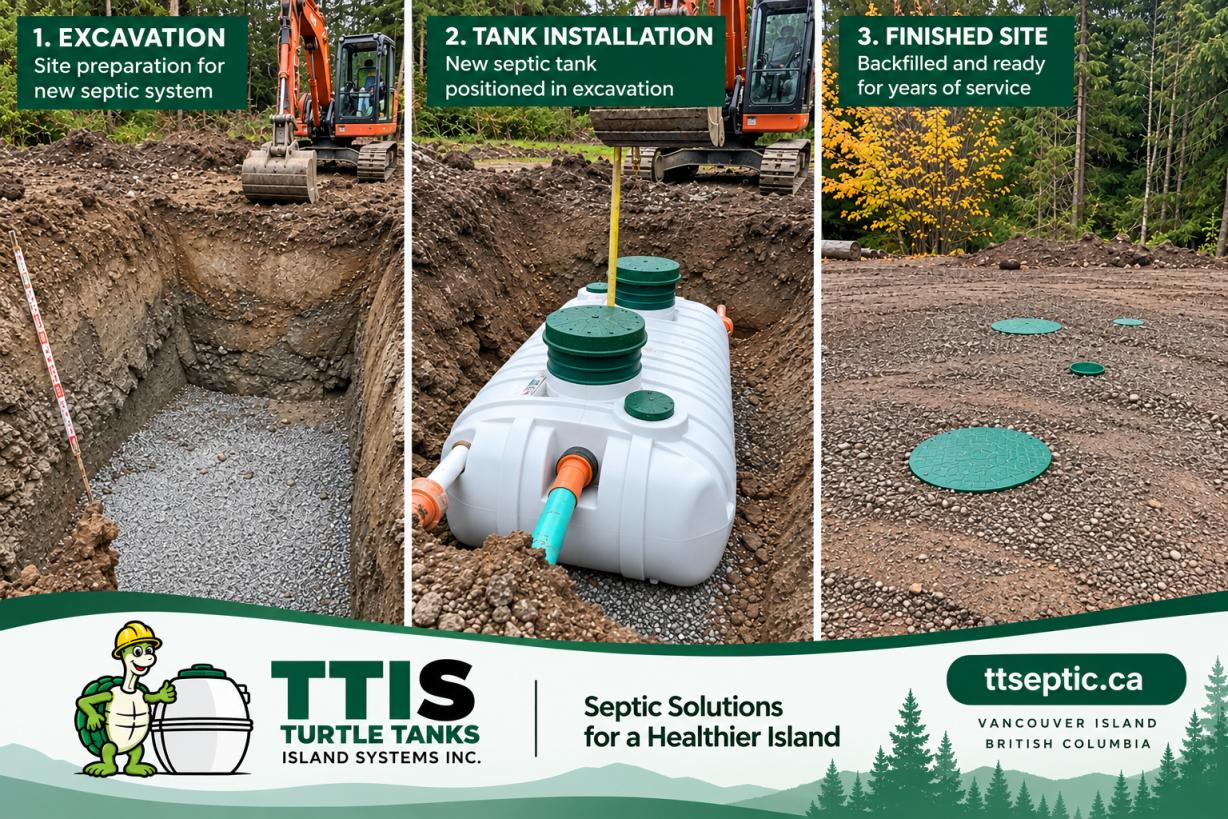
The septic system replacement process in British Columbia follows a defined path under the Sewerage System Regulation. It is not a matter of digging up a tank and dropping in a new one.
For systems covered by section 8 of the regulation, the Authorized Person files the required information before construction begins. After construction is complete, that same Authorized Person files the Letter of Certification within 30 days (Onsite Sewage System Management).
The general sequence looks like this:
- Site investigation. The property, soil, water table, and existing system are reviewed.
- Design and planning. The Authorized Person prepares a system design suited to the site.
- Filing. Required information is filed before construction, where the regulation applies.
- Construction. The system is installed or replaced, coordinated with other trades.
- Certification. The Letter of Certification is filed within 30 days after completion.
- Closeout. Documentation and a maintenance plan are handed to the owner.
Who Is Involved and What Each Role Does
Clear roles keep a project moving. Here is who does what:
Role | Responsibility |
|---|---|
Property owner | Decides on the project, provides access, keeps records |
Authorized Person (ROWP or equivalent) | Assesses the site, prepares a design, or files required information when authorized for that work. |
TTIS | Coordinates the project, trades, materials, and documentation |
Health authority | Receives filings as required under the regulation |
Turtle Tanks Island Systems coordinates the project from assessment through to closeout, including site investigation, design coordination, filing support, construction, and completion documentation. The regulated design and assessment work stays with the Authorized Person, keeping roles clean and the project defensible.
Conclusion: Your Next Step Toward a Working Septic System
Warning signs give you a reason to investigate. An assessment helps identify the cause and whether maintenance, repair, redesign, or replacement is the right next step.
Turtle Tanks Island Systems helps homeowners across Vancouver Island move from worry to a working system, coordinating site investigation, design and planning, replacement, and closeout documentation while keeping owners informed at every stage.
Frequently Asked Questions
How do I know if my septic system needs to be replaced?
Signs such as sewage backing up, persistent slow drains or unusually wet ground can have different causes. They are reasons to investigate, but they do not by themselves show that the whole system needs replacement. An Authorized Person can assess the system and advise whether repair, maintenance or replacement should be considered.
Can a failing septic system be repaired, or does it need replacement?
It depends on what is causing the problem and the condition of the system. Some faults may be repairable, while damage or problems with the soil treatment area may require more extensive work. The appropriate Authorized Person can assess the property and explain the options. The right scope depends on the system, site and applicable requirements.
What should I do if sewage is backing up into my home?
If wastewater is backing up, reduce water use and keep people and pets away from any sewage. Avoid opening the tank. Contact an appropriate professional to assess the cause and advise what to do next. A backup is a serious warning sign, but it does not by itself show that the entire system needs replacement.
What is involved in the septic system replacement process?
The process depends on the property and proposed work. Where section 8 of BC’s Sewerage System Regulation applies, the Authorized Person files the required information before construction and files the Letter of Certification within 30 days after construction is complete. TTIS coordinates the project with the owner and appropriate professionals; the Authorized Person is responsible for the regulated work and filings.